Social Media Marketing for Small Business: What Actually Works in 2026
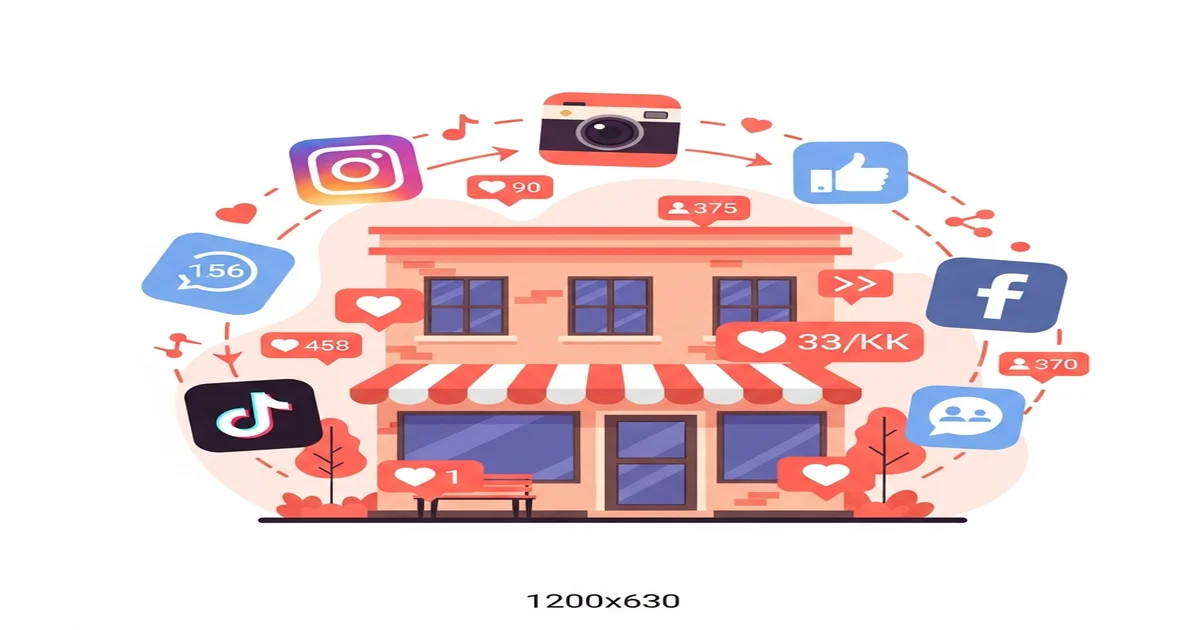
Social Media Marketing for Small Business: What Actually Works in 2026
A bakery owner told me she was spending 3 hours every day posting on Instagram, Facebook, TikTok, X, and Pinterest.
She had 4,000 followers across all platforms. Her posts were getting 20-50 likes. And in 6 months, she could trace exactly 2 customers to social media.
Three hours a day. For 2 customers.
We scrapped everything. Focused on one platform. Changed her content strategy completely. Cut her time to 30 minutes a day.
Result: 47 new customers in the next 90 days, all from Instagram. Her revenue jumped 35%.
Social media can absolutely work for small businesses. But most businesses are doing it wrong — spreading too thin, posting the wrong content, and measuring the wrong things.
Here’s what actually works.
The Uncomfortable Truth About Social Media for Small Business
Let’s get this out of the way: social media is not the best marketing channel for every business.
If you’re a local plumber, you’ll get way more customers from optimizing your Google Business Profile and local SEO than from posting plumbing tips on Instagram.
If you’re a B2B software company, LinkedIn and email marketing will outperform TikTok every time.
Social media works best when:
- Your business is visual (food, fashion, fitness, beauty, home decor)
- You serve consumers directly (not other businesses)
- Your customers make emotional or lifestyle-driven purchases
- You have a personality or story worth following
If that sounds like you, keep reading. If not, check out our guide on free tools to grow your small business for channels that might work better.
Rule #1: Pick ONE Platform (Seriously, Just One)
This is the advice nobody wants to hear, but it’s the most important thing I’ll tell you.
You don’t need to be on every platform. You need to be great on one.
How to Pick Your Platform
Choose Instagram if:
- Your business is visual (food, products, design, beauty)
- Your customers are 18-45
- You can take good photos or short videos
- You want to build a brand and community
Choose Facebook if:
- You serve a local community
- Your customers are 35+
- You want to use Facebook Groups
- You rely on events and community engagement
Choose TikTok if:
- You can create entertaining or educational short videos
- Your customers are 18-35
- You’re not afraid to show personality
- Your industry has untapped video potential
Choose LinkedIn if:
- You serve other businesses (B2B)
- Your customers are professionals or executives
- You share industry insights and thought leadership
- Networking drives your business
Choose Pinterest if:
- You’re in home decor, fashion, food, or wedding industries
- Your content is highly visual and “saveable”
- You want long-term traffic (Pinterest pins keep working for months)
The Two-Platform Exception
Once you’re consistently getting customers from your first platform (at least 3 months of results), you can add a second one. But not before.
Rule #2: Stop Posting What YOU Want to See
The biggest mistake small businesses make on social media is posting content that only the business owner cares about.
Nobody wakes up wanting to see:
- “Happy Monday! We’re open until 6pm today!”
- Stock photos with inspirational quotes
- A blurry photo of your product on a messy counter
- “Check out our website!” with a link
Your audience scrolls past 300+ posts per day. You have about 1.5 seconds to make them stop.
The 4 Types of Content That Actually Work
1. Educational Content (40% of your posts)
Teach something useful related to your industry. Not a sales pitch — actual value.
- A bakery: “3 reasons your homemade bread isn’t rising (and how to fix it)”
- A mechanic: “The 5-second check that tells you if your tires need replacing”
- A salon: “How to make your blowout last 3 days”
Educational content builds trust and positions you as the expert.
2. Behind-the-Scenes (25% of your posts)
Show the real, human side of your business.
- How you make your product
- Your morning routine opening the shop
- Packing orders
- Your team having fun
- The messy reality of running a business
People follow businesses because they connect with the people behind them.
3. Social Proof (25% of your posts)
Show that other people love what you do.
- Customer testimonials and reviews
- Before-and-after transformations
- Screenshots of happy DMs or texts (with permission)
- User-generated content (customers using your product)
- Case study results
Social proof is the most powerful persuasion tool on the internet.
4. Promotional Content (10% of your posts)
Only 10%. That’s it.
- New product launches
- Sales and special offers
- “Book now” or “Order here” posts
- Links to your website
If more than 10% of your content is promotional, people will tune you out. Earn the right to sell by giving value first.
Rule #3: Video Is Non-Negotiable in 2026
If you’re still only posting static images, you’re fighting with one hand behind your back.
Short-form video (Reels, TikToks, Shorts) gets 2-3x more reach than photos on every platform.
You don’t need professional equipment. You don’t need to be comfortable on camera (yet). You don’t even need to show your face.
Easy Video Ideas for Any Business
- “Day in the life” of your business — Point your phone at interesting moments
- Process videos — Show how you make, build, or do something (time-lapse works great)
- Quick tips — 15-30 second advice clips related to your industry
- Customer reactions — Film the moment a customer sees the finished result
- Trending audio — Use popular sounds with your own twist
The “Good Enough” Video Setup
- Your phone (any phone from the last 3 years is fine)
- Natural light from a window
- A $15 phone tripod from Amazon
- The native app (Instagram Reels or TikTok)
That’s it. Stop waiting for perfect equipment. Perfect is the enemy of posted.
Rule #4: Engage Like a Human, Not a Brand
Social media is social. The businesses that win treat it like a conversation, not a billboard.
Daily Engagement Checklist (15 minutes)
- Reply to every comment on your posts within 2 hours
- Reply to every DM within 4 hours (faster is better)
- Comment on 10 posts from local businesses, customers, or industry accounts
- Share or repost relevant content from your community
Why This Matters
The algorithm rewards engagement. When you engage with others, the platform shows your content to more people. It’s not just being nice — it’s a growth strategy.
The 80/20 rule of social media growth:
- 20% of your growth comes from posting
- 80% comes from engaging with others
Most businesses flip this. They spend all their time creating posts and zero time engaging. Then they wonder why nobody sees their content.
Rule #5: Use Stories and DMs to Convert Followers to Customers
Here’s where the money is.
Posts build your audience. Stories and DMs convert them to customers.
Stories Strategy
Post 3-5 Stories per day. Mix these types:
- Personal/behind-the-scenes — Build connection
- Polls and questions — Drive engagement (and learn what your audience wants)
- Testimonials — Screenshot happy customer messages
- Soft CTAs — “DM me if you want details” or “Tap the link to book”
Stories create urgency (they disappear in 24 hours) and feel more intimate than feed posts.
DM Strategy
When someone engages with your Stories (reacts, replies, votes in a poll), they’ve raised their hand. DM them.
Not with a sales pitch. With a genuine conversation.
“Hey! Thanks for voting — are you looking to [thing related to your business]?”
This is where relationships turn into revenue. The business owners I work with who are best at social media all say the same thing: “The real sales happen in the DMs.”
How to Measure If Social Media Is Actually Working
Likes and followers are not business metrics. Stop optimizing for them.
The Only Metrics That Matter
1. Website clicks — Are people going from your social profile to your site?
2. DM conversations — Are you having real conversations that lead to sales?
3. Revenue attributed to social — Can you trace actual dollars to social media efforts?
4. Saves and shares — These indicate your content is valuable enough to save or share with others (much more meaningful than likes)
How to Track Social Media Revenue
Simple method: Ask every new customer “How did you hear about us?” and track the answers in a spreadsheet.
Advanced method: Use UTM links in your bio and posts so Google Analytics shows exactly how much traffic and revenue comes from each platform.
Organic vs. Paid: When to Spend Money
Start organic. Don’t spend a dollar on ads until you’ve proven your content works organically.
If your organic posts don’t get engagement, your ads won’t either. Ads amplify what already works — they don’t fix bad content.
When to Start Running Ads
- You’ve been posting consistently for 3+ months
- You have at least 500 engaged followers
- You know which content types perform best
- You have a specific offer or funnel to promote
- You have a budget of at least $300/month to test with
Where to Put Your First Ad Budget
Boost your best-performing organic posts. Don’t create new ad content — take the posts that already got the most engagement and put money behind them. The algorithm has already told you what works.
Start with $10-15/day. Test for 2 weeks. Measure results (website clicks, DMs, purchases — not likes). Scale what works.
The 30-Minute Daily Social Media Plan
Here’s exactly how to spend your time:
Minutes 1-5: Check and respond to comments and DMs from overnight
Minutes 5-15: Create or schedule one post (use your content calendar and batch-create content weekly)
Minutes 15-25: Engage with 10 other accounts (comment, like, share)
Minutes 25-30: Post 2-3 Stories and check analytics
That’s it. 30 minutes. Consistent action beats marathon sessions every time.
Content Calendar: Your First Month
Week 1:
- Mon: Educational tip (Reel/video)
- Wed: Behind-the-scenes Story series
- Fri: Customer testimonial post
Week 2:
- Mon: Process/how-it’s-made video
- Wed: Industry myth-busting post
- Fri: Share a positive review with your commentary
Week 3:
- Mon: Quick tip video (trending audio)
- Wed: Poll in Stories asking what customers want
- Fri: Before-and-after transformation
Week 4:
- Mon: “Day in the life” video
- Wed: Promotional post (sale, new product, booking link)
- Fri: Community spotlight (tag a local business or customer)
Repeat. Adjust based on what gets the most engagement.
Common Mistakes to Avoid
Buying followers. Fake followers destroy your engagement rate and make your account look suspicious. Build real ones.
Posting inconsistently. Three posts in one day, then nothing for two weeks, then five posts. Pick a schedule and stick to it.
Ignoring DMs. Every unanswered DM is a potential customer walking away.
Being on too many platforms. Master one before adding another.
Only posting product photos. Your feed shouldn’t look like a catalog. People follow people, not products.
Not having a clear bio. Your bio should say: who you help, what you do, and how to take the next step. Include a link.
Your Next Steps
- Pick one platform (based on the guide above)
- Set up or optimize your profile with a clear bio and link
- Plan your first week of content using the calendar template
- Commit to 30 minutes per day for 90 days
- Track your results (website clicks, DMs, revenue)
Social media isn’t magic. It’s a system. When you follow the right system consistently, it works.
If your website is getting traffic but not converting those visitors into customers, that’s a different problem — read our guide on why your website gets traffic but zero sales.
And for the full picture on getting found online, here’s what actually works for SEO in 2026.
Need a Social Media Strategy That Actually Gets Results?
I help small businesses build social media systems that generate real customers — not just likes.
Whether you need a full strategy, content calendar, or just a push in the right direction, I can help.
Visit gusdigitalsolutions.com or shoot me an email. Let’s figure out what works for your business.

Written by Gustavo Vasquez
Web developer and digital marketing consultant helping small businesses get online. 15+ years of tech experience, bilingual (English/Spanish).
Book a free consultationRelated Articles
How to Get More Customers with Google Business Profile in 2026
Step-by-step guide to optimizing your Google Business Profile for more calls, visits, and customers. Proven GBP strategies that work in 2026.
How to Write Website Copy That Converts (Without Hiring a Copywriter)
Learn to write website copy that turns visitors into customers. Practical formulas for headlines, CTAs, service pages, and about pages that actually convert.
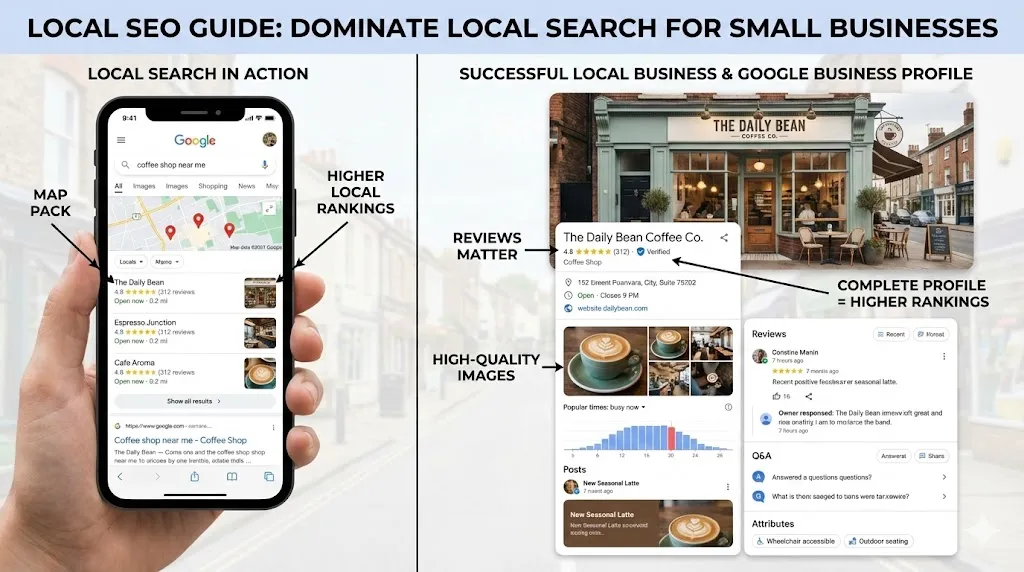
How Local SEO Can 10X Your Small Business
Learn how local SEO helps small businesses dominate Google Maps and local search. Complete guide with Google Business Profile tips, review strategy, and actionable checklist.
Need help with your project?
Whether it's SEO, a new website, or fixing bugs - I can help.
Get in Touch